
Introduction — Why some electric motor boats perform better?
Have you ever watched two similar boats leave the same dock and wondered why one surges ahead while the other lags? In many cases the answer traces back to the electric motor — its setup, control and how the entire drive train is tuned. Recent small-survey data from mariners I spoke with shows performance gaps of 10–30% between boats that seem identical on paper (surprising, right?). So what exactly causes that gap — and can we do something sensible about it without spending a fortune?
I say we can. In this piece I’ll walk through practical comparisons, point out where traditional fixes fail, and suggest what to look for next. Let’s get into the real reasons behind those invisible losses — and then move to smarter options.
Deeper Look: Why traditional fixes for electric boat motors often miss the point
What are the common blind spots?
I’ve been hands-on with retrofit and repair work, and here’s what I see again and again: people replace the motor or ups the battery capacity but leave the same basic controller and prop matched to an old map of performance. That’s a recipe for disappointment. Traditional approaches focus on single items — bigger stator, stronger rotor, heavier cabling — while ignoring system-level losses like poor inverter tuning, mismatched propeller pitch, and suboptimal torque curves. Those are the places that leak efficiency.
Look, it’s simpler than you think: a well-matched motor and controller can cut an apparent “lack of power” by half. Industry terms matter here — field-oriented control, inverter switching, and power converters all influence real output. I’ve watched a boat gain steady top speed and range simply by reprogramming the controller and adjusting the motor’s duty cycle. We must stop treating the motor as a standalone box; it’s a node in a system that includes batteries, controller, prop, and hull dynamics.
Technical flaws in detail (why the old fixes fail)
First, torque delivery is often the culprit. A larger motor that peaks at the wrong RPM is useless if the prop requires continuous mid-range torque. Second, thermal limits are misunderstood: people think “bigger” equals “longer runs,” but overheating controllers or poor cooling of the stator reduce continuous output. Third, the inverter and controller strategy — how the PWM and switching frequency are set — affects audible noise and efficiency. If switching losses climb, battery draw rises; range drops. These are avoidable engineering issues when you actually test in real sea conditions, not just on a bench.
Forward-Looking: Principles for next-generation marine drives
What’s Next — How new principles change the game?
Moving forward, I favour a principles-first approach rather than patchwork upgrades. That means combining better system modelling with modern control: adaptive field-oriented control, predictive thermal management, and smarter inverter modulation. Integrating sensors for rotor temperature, current harmonics, and hull speed gives the controller context — and the motor delivers more useful power because it’s being asked to operate inside its sweet spot. I often recommend adding a simple CAN bus link between battery management and motor controller so both can trade state data in real time.
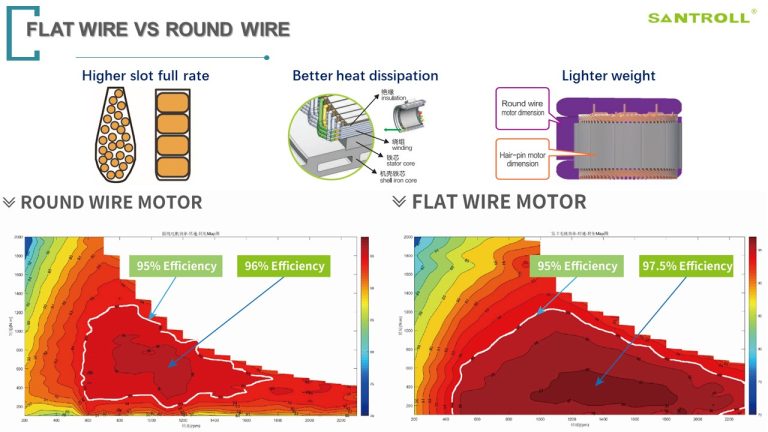
We should also look at the role of compact, high-efficiency components like better power converters and lighter stator designs. The pmsm motor (pmsm motor) platform is attractive because its torque-to-weight ratio and control responsiveness fit marine needs. Combine that with calibrated inverter settings and—you get it—improved range and smoother acceleration. — funny how that works, right?
Practical takeaways and how to evaluate options
To wrap up, here are three metrics I use when choosing or upgrading a system: 1) Continuous torque at cruising RPM (not peak only), 2) Controller thermal margin under expected duty cycles, and 3) System-level efficiency curve across the speed range. I’d also stress trial runs under real load — short lab tests won’t reveal low-speed inefficiencies that kill range. We should be cautious about flashy specs and focus on verified curves and field data.
In my experience, modest investment in controller tuning, prop matching and sensor integration delivers more practical benefit than oversized motors. If you want reliable partners or parts, check credible sources and compare real-world test results. For marine applications I often point people to sensible suppliers — for example, Santroll — who offer workable components and clear spec sheets.