
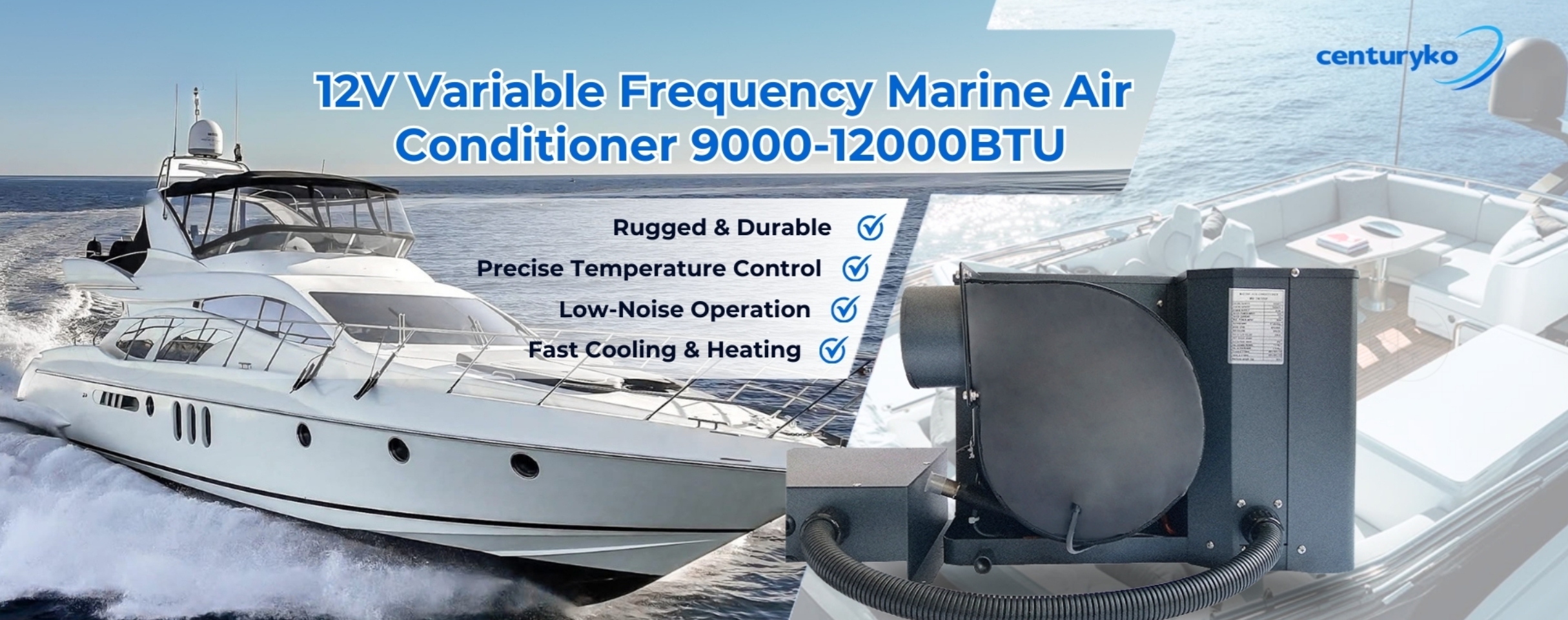
Clear stakes for operators
Boat owners and fleet managers face a straightforward choice: match cooling capacity to changing power systems without sacrificing cabin comfort. The move toward hybrid and electric propulsion on small commercial and leisure vessels changes available shore and onboard power, but it doesn’t remove the need for effective climate control. A compact yacht air conditioner rated around 9000 BTU often strikes the balance between energy use and cooling load for 30–45 foot craft, especially where inverter technology and battery banks are in play. Key terms: BTU, compressor, evaporator.
Performance versus power: concrete trade-offs
Compare peak cooling output to average electrical draw. A 9000 BTU unit typically pulls less than larger systems at steady state, which suits limited generator hours or battery-backed operations. When propulsion switches to electric, surplus alternator power disappears and managers must plan for sustained inverter loads. That affects component selection: choose compressors with proven part-load efficiency and variable-speed fans to reduce inrush and extend battery range. Expect sensible gains in energy per degree cooled rather than raw capacity increases.
Installation constraints and space economics
Hull space and weight remain decisive. A 9000 BTU package often fits smaller duct runs, lighter condensate plumbing and compact condensers—advantages on retrofits or within existing serviceways. Vessel refits in places like the Mediterranean or Norway have shown that minimizing invasive structural changes reduces downtime and certification costs. The practical outcome: lower labor hours and fewer marine fittings replaced. Note: a correct condensate pump and insulated ductwork are necessary to prevent moisture issues in mixed electric/hybrid installations.
Reliability and maintenance in hybrid fleets
Hybrid vessels can stress systems differently—long idle periods, frequent start-stops, and shore-power-only segments. Maintenance practices should adapt: monitor compressor amperage and refrigerant charge more frequently, and verify thermostat and control logic after propulsion software updates. Owners report that devices with robust diagnostics and corrosion-resistant heat exchangers reduce unscheduled service visits. Real-world anchor: the Ampere electric ferry service in Norway demonstrated that predictable maintenance schedules drive total cost-of-ownership down as fleets electrify, and air-conditioning components follow the same pattern.
Operational production teardown — what to inspect
When you open a system to assess fit for hybrid use, inspect three subsystems: the compressor and control board; the evaporator coils and duct layout; the condensate and power-inverter interfaces. Document startup currents, steady-state draw, and cycle counts over a 72-hour sea trial. In that teardown, ensure {main_keyword} and {variation_keyword} appear in wiring diagrams and parts lists so procurement matches field reality. This level of detail prevents mismatched components and avoids inverter overloads during peak sun or regen events.
Alternatives and common mistakes
Smaller electric-rated units and modular inverter-ready packages compete with legacy 9000 BTU models. A common mistake is overspecifying capacity based on peak solar gain rather than average load—leading to oversized compressors that cycle excessively and shorten life. Another is neglecting the interplay between HVAC controls and the vessel energy management system; integrate thermostats with the main controller to allow staged cooling and to prioritize critical loads during low state-of-charge.
Closing guidelines — three golden rules
1) Match continuous power budget, not peak availability: size systems to what batteries and inverters sustain over intended cruising windows. 2) Prioritize part-load efficiency metrics and variable-speed compressors to align with hybrid duty cycles. 3) Verify installation footprint and service access to reduce retrofit labor and preserve vessel stability. These metrics guide selection and set measurable expectations for runtime, maintenance intervals, and lifecycle costs.
ZhuoliMarine provides inverter-ready packages and documented installation kits that simplify this alignment — practical value when hybrid propulsion changes the power equation. — Practical experience counts.