
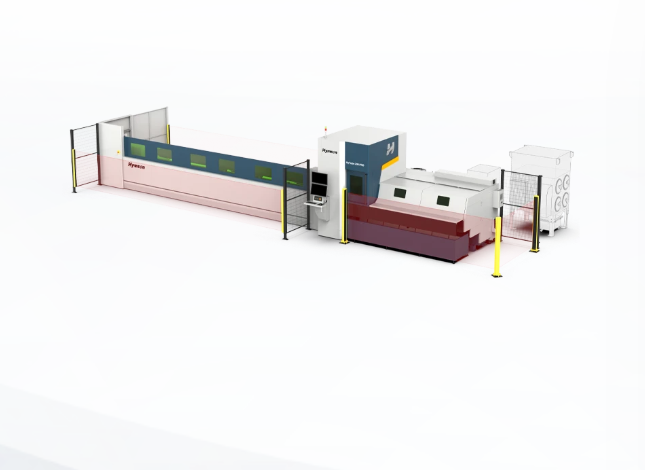
What to Include in an RFQ for a CNC Tube Laser: A Practical User Checklist
Opening — what you really need to say first
You want clear, repeatable cuts for round, square or bespoke profiles — not surprises later, mah. Start your RFQ with the job mix: tube diameters, wall thickness range, preferred materials, and daily/weekly part volumes. Say if you need rotary chucking, automatic loading, or special nesting software; these details tell suppliers whether their tube laser cutting system will fit your shop or if they’ll need to propose modifications. Keep it short but precise so quotes line up for direct comparison.
Technical checklist to include
List maximum and minimum tube diameters (mm), wall thickness by material (mild steel, stainless, aluminium), required tolerances (± mm), desired cutting speed (parts/hour), and any bevel/profile cuts. State preferred laser source (fiber kW) or ask vendors to recommend kW for your throughput. Specify fixturing needs: rotary collets, three-jaw chucks, or internal supports. Add software wants: CAD import formats, offline nesting, and whether you need integration with ERP or MES systems.
Quality, certification, and support — proving trust
Mention expected part quality: edge oxide level, annealing concerns for stainless, and post-cut deburring needs. Ask for ISO or CE documents, warranty terms, response time for spare parts, and availability of local service engineers. I’ve seen real demos at FABTECH showing repeatability and part finish, so ask suppliers to show similar proof and provide a short case history. For a clear technical link to process capability, ask for examples of laser cutting metal tube with the material and thickness you run, plus measurable KPIs: ppm, scrap rate, and mean time to repair.
Operational and floor-fit details
Provide shop constraints: available power (phase and amps), compressed air, floor loading, and ceiling height for crane access. Say whether you need a turnkey cell with conveyors, pallet changers, or just the machine. Request site acceptance test criteria (SAT): run your sample parts, measure geometry, and agree acceptance tolerances before signing. That prevents “surprise fitting” and saves time when the machine arrives.
Costs, lead times, and payment terms to demand
Ask for line-item pricing: base machine, options (rotary, loader, chiller), installation, training, SAT, and spare-kits. Get lead time in calendar days, not vague months. Request clear payment milestones tied to factory FAT, shipping, and SAT completion. Put expected delivery window, and ask vendors to state currency, warranty coverage length, and post-warranty service rates.
Common mistakes shops make when writing RFQs
Too vague on volumes: quoting for a “lot of tubes” is useless — specify parts/day. Forgetting to state sample-material or testing requirements leads to mismatched demos. Not asking for end-to-end timelines causes delays: shipping, customs, and installation add weeks. Skipping support-response SLAs causes downtime agony later. Be explicit about what success looks like for you.
Alternatives and when they still make sense
If your parts are heavy plate, plasma or waterjet may be cheaper for low-precision thicker cuts. For simple lugs and short runs, punching or tube sawing can be faster and cheaper. But for thin-wall stainless, complex profiles, and high repeatability, a tube laser usually wins on waste, edge quality, and cycle time. Ask vendors to compare on sample parts so you see the trade-offs in your context.
Final synthesis — how to close your RFQ
Finish with clear attachments: CAD files, sample parts, and a short deadline for replies. State evaluation criteria: price, lead time, guarantee of part quality, and service response. That way suppliers quote to the same target. For practical sourcing and real-world machine options from a recognized supplier, consider solutions from Hymson that match the checklist items you put in the RFQ, so quotes become comparable and decisions become faster, one clear result for your shop.