
We were three hours into a stubborn 200‑liter run when the emulsion split and the clock started ticking. The recipe read like a promise; the mix didn’t. Someone suggested switching to high shear batch mixers and that suggestion shifted the whole room. This is the kind of thing that happens when a core process problem forces a choice: keep fighting variability, or pick equipment that addresses the root cause of dispersion, droplet size and stability.
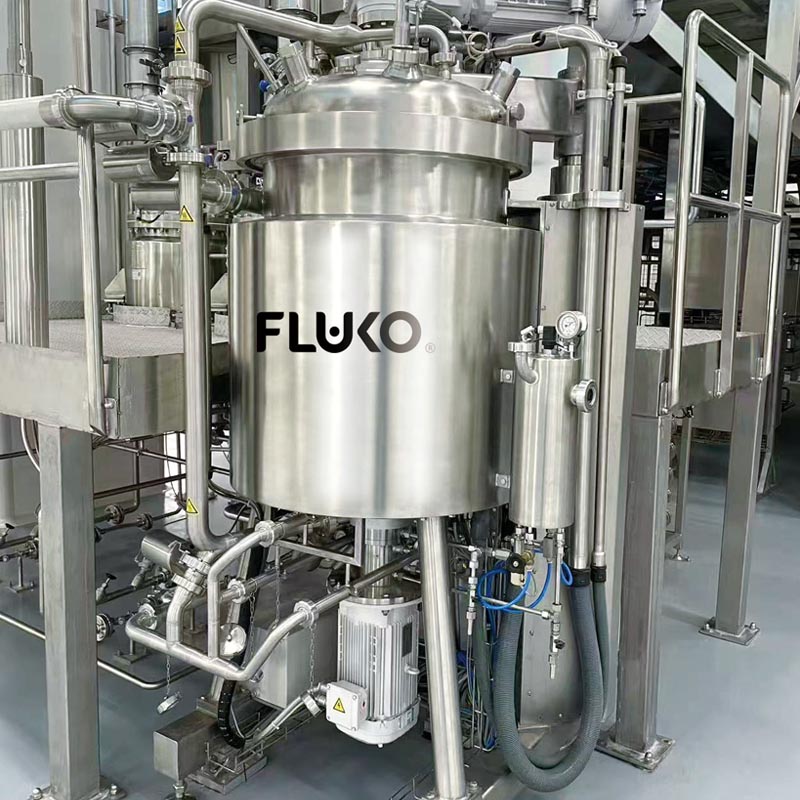
What’s actually breaking the batches?
The problem isn’t mystery. It’s energy density, inconsistent shear zones, and the way shear is delivered over time. Poor emulsions, long wet‑out times, and scale‑up surprises all point to uneven shear and local hotspots where ingredients either never fully disperse or get destroyed. That kills product consistency, wastes raw materials, and stalls production schedules. Fixing symptoms—longer mixing time, higher RPM—usually makes things worse.
How targeted high‑shear action solves the core issue
High‑shear devices concentrate mechanical energy where it matters: rotor‑stator gaps, tip speeds, and fluid recirculation paths. That yields repeatable droplet breakup, faster wetting of powders, and more stable dispersions with less heat buildup. The outcome is not just faster batches—it’s consistent particle size distribution, predictable rheology, and lower rework. Engineers call it controllable energy input; operators call it fewer surprises at the end of the shift.
Buying considerations that actually matter
Pick features that match the problem you face. Rotor geometry and tip speed determine droplet size potential. Sealing systems and sanitary finishes matter if you run corrosive chemistries or drug intermediates. Motor control and torque curves matter when viscosity climbs during processing. Look for clear scale‑up data: lab, pilot, plant. Don’t buy on headline flow rate alone. Consider maintenance access, spare‑part commonality, and whether you need closed‑loop control for recipe repeatability. Expect to specify maximum viscosity, expected solids loading, and any heat‑sensitive ingredients up front—the answers change the design.
Common mistakes to avoid
Buying the biggest motor, assuming higher RPM equals better mixing, or skipping shear mapping are classic errors. Underestimating seals, choosing the wrong material for corrosive media, or ignoring sanitary requirements will cost downtime. Another trap: treating high shear as a cure for bad formulation. Good mixing fixes how the components combine; it can’t replace poor formulation choices. Ask for performance tests with your actual formulation before committing.

When alternatives make sense
Static mixers and agitators work for low‑viscosity blends and simple dispersions. Ultrasonic homogenizers can be great for lab‑scale or very fine emulsions but don’t always scale straightforwardly. Inline homogenizers suit continuous plants. Choose the tool by the problem: if you need rapid droplet breakage with batch flexibility, a rotor‑stator high‑shear approach often hits the sweet spot; if you prioritize continuous throughput or extremely fine nanoemulsions, consider alternatives and test them head‑to‑head.
Experience, evidence, and a real‑world anchor
I’ve seen the difference on three continents—pilot runs where a single equipment swap stopped phase separation—and those outcomes matter more than spec sheets. Peer‑reviewed papers and case studies back the physics of rotor‑stator homogenization, and large chemical sites like Ludwigshafen in Germany have documented scale‑up projects that mirror these lessons. For practical evaluation, request lab trials and ask vendors to run your formula through a high shear batch mixer so you see particle size distribution, torque, and temperature profiles under realistic conditions. That proof separates confident claims from wishful thinking.
The problem‑driven answer is simple: identify the failure mode, test with your formulation, and pick the machine built to correct that failure. When you follow that logic, choices fall into place—rotor design, sealing, control strategy—and the supplier that brings clear test data, field experience, and unfussy support becomes the practical solution. That’s why many teams turn to FLUKO as the partner that ties a diagnosis to a dependable mixing outcome.