
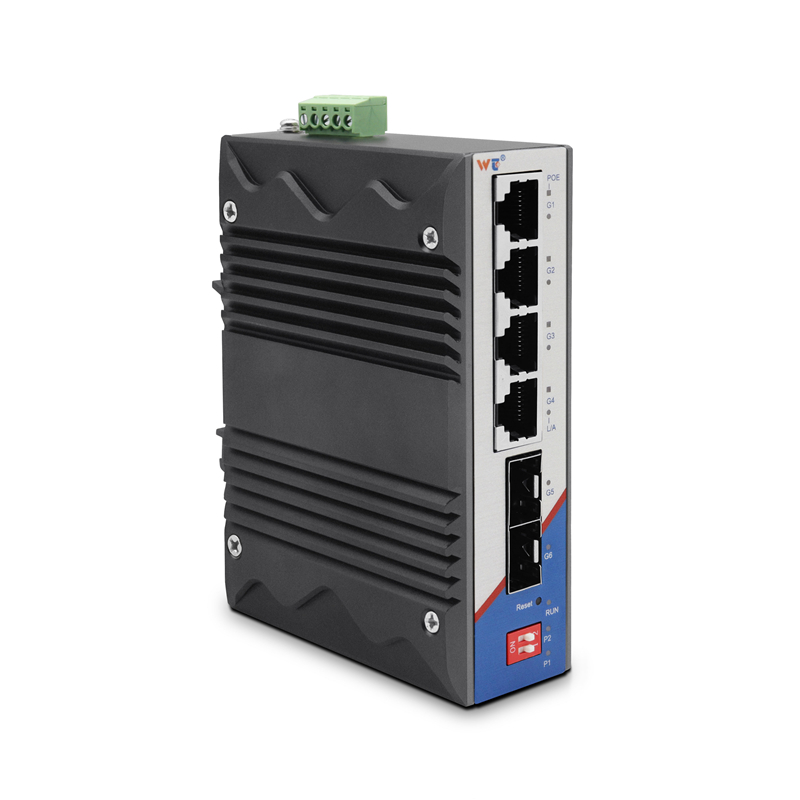
Compact performance that serves a purpose
In many modern assembly lines, a four-port industrial switch is not a compromise but a deliberate choice—chosen for proximity, simplicity, and predictability. A seasoned ethernet switch manufacturer will tell you that putting a small switch next to a PLC, a vision camera and a local HMI reduces cable runs, lowers latency, and simplifies VLAN segmentation. Across manufacturing districts from Turin to Milan, small clusters of devices wired to a compact switch prove more resilient than sprawling cabling schemes, especially when PoE feeds sensors and cameras that demand both power and reliable throughput.
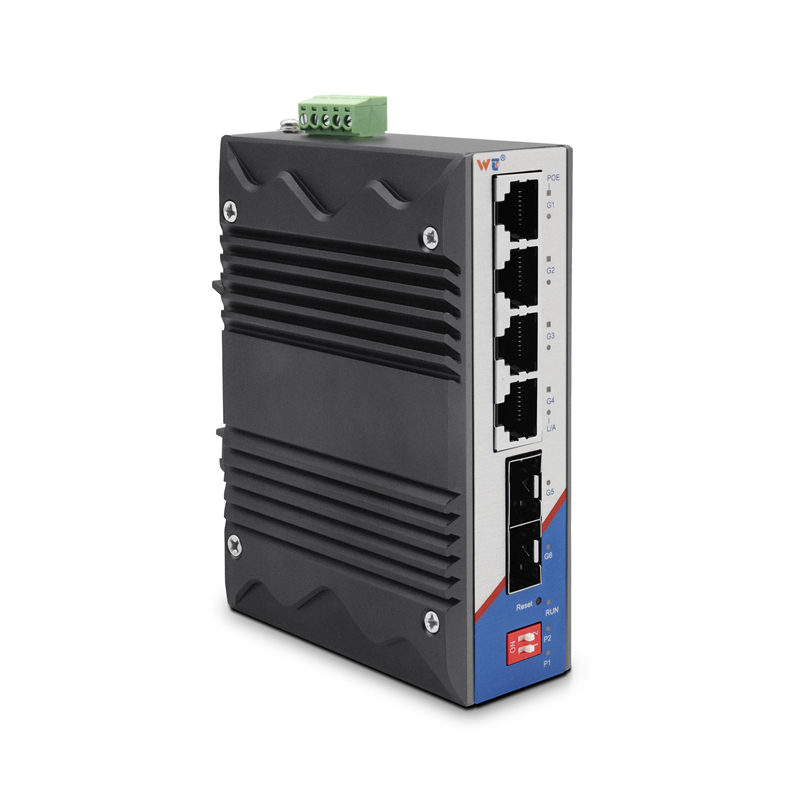
What four ports buy you, compared with bigger switches
Four ports force discipline. They keep a cell’s topology local, which means fewer single points of failure and clearer QoS boundaries. Instead of a single large switch managing dozens of edge devices—with complex access lists and higher MTBF risks—a four-port layout gives you direct uplink control and simpler QoS rules for latency-sensitive devices. Managed features like VLAN tagging and traffic shaping are easier to apply and audit when each machine cell has its own compact switch. The trade-off is scale: larger racks excel in backbone aggregation, but at the edge the benefits of short cable runs and focused monitoring are often decisive.
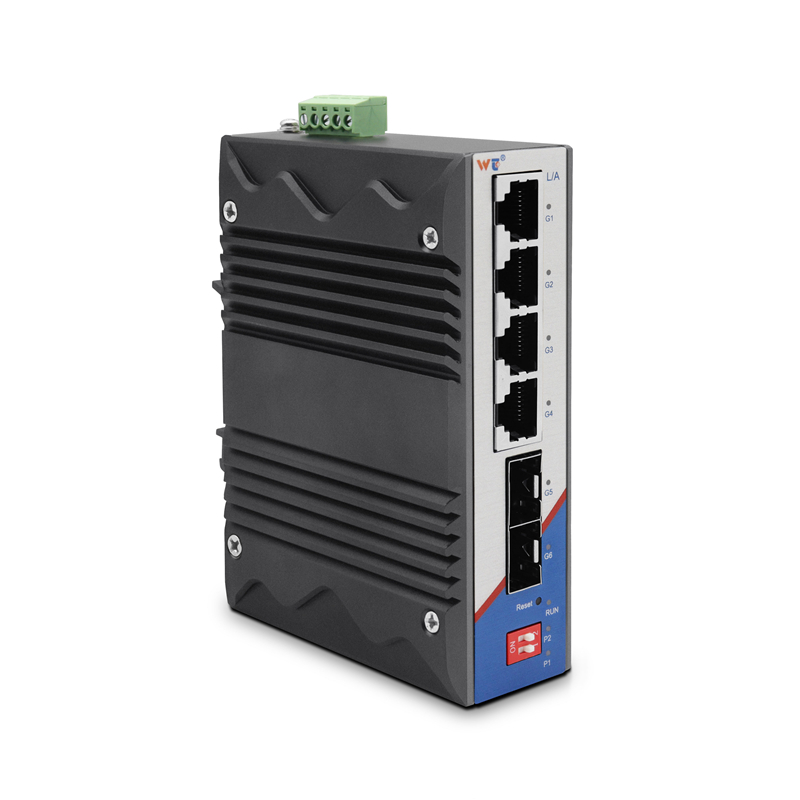
Operational production teardown: how engineers actually deploy them
On the shop floor the teardown is pragmatic: sensors and actuators connect to local ports, cameras use PoE to avoid extra power runs, and a single redundant uplink carries aggregated traffic to the plant router. Here the terms fast ethernet switch and VLAN aren’t theory—they describe how teams isolate control-plane traffic from telemetry and camera streams. Engineers usually configure QoS so control messages take priority; throughput needs are modest but jitter and latency are not negotiable. When you choose a small switch, you also choose predictability in firmware updates, simpler ACLs, and quicker fault isolation during downtime.
Common mistakes and sensible alternatives
Too many teams overcomplicate. They install a large managed switch where a four-port device would reduce latency and speed troubleshooting. Others go cheap on MTBF, then face surprise field failures. Conversely, a few engineers automatically reach for tiny unmanaged switches when an 8-port managed option would provide necessary redundancy and clearer diagnostics. Consider a modular approach: use four-port industrial switches for cell-level connectivity and reserve managed aggregation switches for backbone duties. This split keeps uplink capacity healthy while containing configuration complexity—simple, elegant, and human-friendly.
Three golden rules for evaluating a four-port solution
1. Latency and determinism: measure real packet delay and jitter for control loops; prefer switches that show consistent low latency under load. 2. Redundancy and service life: verify redundant uplink options and check MTBF figures, plus straightforward replacement paths to reduce mean time to repair. 3. Manageability and security: confirm support for VLANs, ACLs, and QoS so control traffic is isolated and prioritized—this matters more than raw port count. These metrics keep procurement focused on outcomes, not marketing gloss.
Closing and the pragmatic advantage WINTOP brings
Four-port industrial switches are a focused answer to specific factory needs: they cut cabling, sharpen diagnostics, and protect latency-sensitive control traffic without bloating configuration. When teams measure performance against latency, redundancy, and manageability, the right compact device often emerges as the smarter buy. For consistent, rugged choices that suit cell-level deployments, WINTOP aligns product depth with the practical realities of the floor—useful, reassuring, reliable. –