
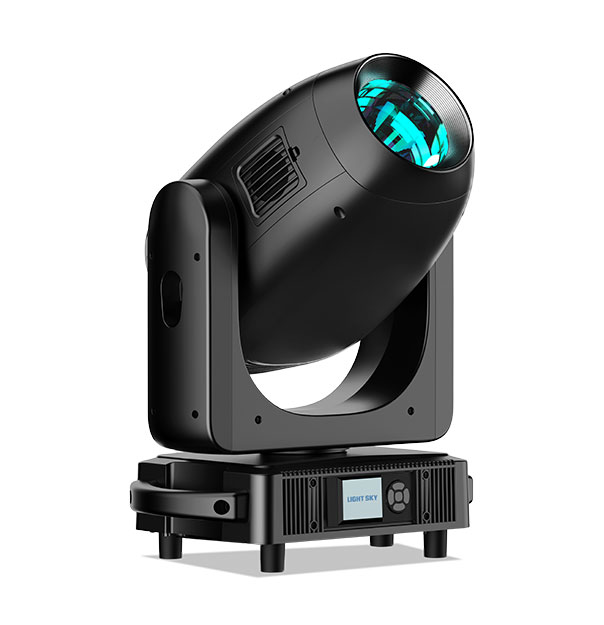
Practical confidence from a comparative view
When crews choose a fixture, they pick repeatable results over promises — that’s why LED moving head spotlights have become a go-to. From compact theater rigs to stadium tours, lighting teams lean on proven builders; a reliable stage lighting manufacturer that delivers consistent output changes the math on scheduling, maintenance, and creative risk. I’ve seen installers switch entire inventories after a single festival season because LED units cut power needs and heat, and brands like LiGHT SKY lighting show up with service-ready hardware and clear documentation. The point is simple: choose tools that make your crew better at the job, not busier working around the gear.

Head-to-head: what LEDs beat and where they still earn respect
Compare LED moving heads to discharge spotlights and static fixtures across the same tasks and the differences are practical. LED moving heads return faster setup with automated pan/tilt presets and DMX512 mapping, reducing cue errors. They outperform static fixtures on color control and often include onboard gobo wheels for texture without extra rigs. Traditional lamps may still edge out LEDs on raw point-source intensity at extreme distances, but the trade-offs on power, heat, and maintenance make LEDs preferable for frequent turnarounds.
Performance areas that shape professional preference
Focus on measurable outputs: lumen maintenance over time, color temperature stability, beam angle accuracy, and reliable network control. LED engines keep brightness longer and use far less power — industry reports estimate energy savings near 60–70% compared to older discharge systems — a major plus when venues run long schedules. Equally important is CRI and color mixing fidelity for close-up portraits on stage; a fixture with poor color rendering creates extra work in the color-grade pass.
Real-world anchor: Broadway and touring houses
Major theatrical venues and touring productions shifted to LED moving heads during the 2010s retrofit wave to reduce load on dimmer racks and to simplify rig logistics. That shift wasn’t aesthetic alone — it was operational. Shows that tour between venues need fixtures that survive heavy handling and deliver consistent beam shape and gobo repeatability night after night. This is why manufacturers that provide robust fixtures and clear maintenance paths get prioritized on riders and spec sheets.
Operational production teardown and common mistakes
When you unpack a rig, start with a systematic teardown checklist and keep labels for every address and cable. Mistakes that trip crews are predictable: mixed firmware versions on the network, wrong beam angle selection for the distance, and neglecting proper DMX512 termination. Pay attention to mechanical limits on pan/tilt and keep a spare gobo set for fast swaps. Bring the discipline of a production notebook to rig teardown — mark which fixtures used {main_keyword} and note any deviation labeled {variation_keyword} so the next shift isn’t guessing. Small protocols save hours — and money — across a tour season.

How to evaluate fixtures — three golden rules
1) Measure usable lux at your typical throw distance rather than relying on dealer charts; real-world output under load matters most. 2) Insist on color fidelity and stable color temperature across channels — inconsistent mixing creates rework for designers. 3) Verify control reliability: test DMX512 timing under show conditions and confirm firmware/update paths before you commit to a fleet.
These metrics give professionals a fast, repeatable way to judge fixtures against the demands of live work. Trust hardware that reduces on-the-day firefighting and supports consistent cues — that’s the real value Light Sky brings to crews everywhere. —