
Quietly naming the problem
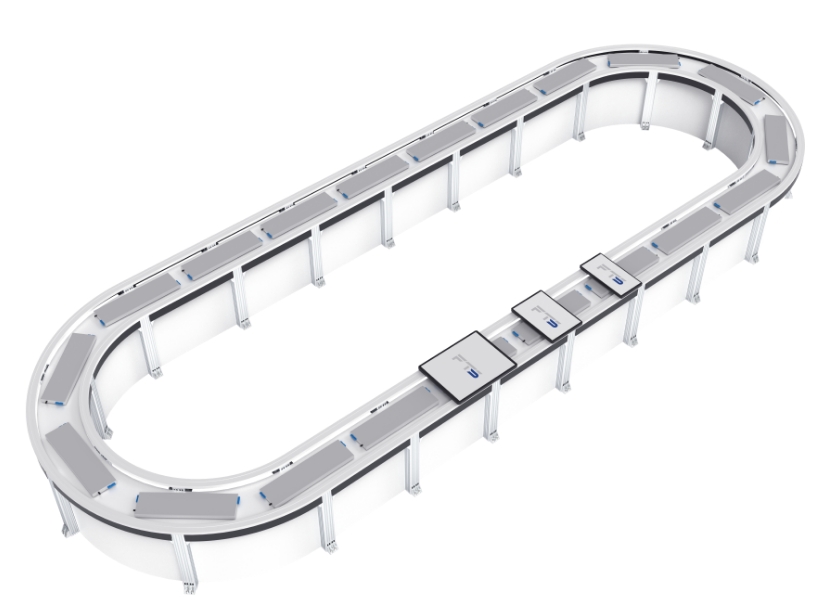
I used to stand beside engineers and pause over the same question: how do you raise output without eroding precision or exploding costs? That pause matters. A single misplaced assumption about part handling can cut throughput or force rework. I remember demonstrations at Hannover Messe where an intelligent conveyor system was compared with alternative feeders; the visible difference was how quickly a line recovered from a minor jam. In many cells that recovery depends on how the linear transport system behaves under real load. From projects with contract manufacturers and OEMs, I’ve seen the same three tensions—throughput, accuracy, cost—reappear, shaped by predictable technical choices.

Core factors that change the balance
Think of each factor as a lever you can nudge. The effect is rarely isolated; moving one lever nudges the others.
– Mechanical indexing and transport precision: tighter guides, shorter tolerances, and stiffer rails reduce positional variance but raise manufacturing and maintenance cost. – Fixturing and part presentation: robust part nests increase pick success and vision reliability; they lengthen changeover time and capital outlay. – Sensing and control: higher-resolution vision and closed-loop motion cut inspection time and rework, yet require more compute and integration effort. – Cycle-time strategy: faster motion saves seconds, but increases fault rates unless motion profiles and damping are optimized. – Changeover flexibility: modular tooling supports mixed-model runs, but modularity can add initial cost and slightly slower steady-state throughput. – Maintenance and downtime planning: preventive maintenance lowers unexpected stops but appears as recurring cost on budgets. – Regulatory design and traceability: meeting ISO 13485 and documented traceability adds steps and data handling that support accuracy but demand engineering time and systems integration.
Typical trade-offs I’ve seen—and how they play out
These are practical patterns, not abstract ideals:
– Spending on high-end vision reduces downstream inspection time and scrap, so ROI shows for complex assemblies with many small tolerances. – Adding soft-touch conveyors or compliant grippers reduces part damage, which cuts cost per unit on delicate devices, but slightly lowers peak throughput. – Choosing a faster servo motor without improving part presentation simply raises the fault rate; throughput gains vanish under increased rejects. – Investing in quick-change fixturing pays off when product mix changes often; for long single-product runs, the same investment may never pay back.
Concrete steps to test improvements without guessing
Use short, controlled experiments. Keep measurements precise. Repeat often.
1) Baseline measurement: record cycle time, pick success rate, and scrap cost over a stable 8-hour window. 2) Change one variable: switch gripper style, alter conveyor speed, or add a sensor. Never more than one. 3) Measure the same metrics for the same window. If throughput rises but scrap rises too, calculate net cost per assembled device. 4) Scale only when net cost moves in the right direction across several runs.

Common pitfalls and how to avoid them
People make the same mistakes. Skip these traps.
– Pitfall: Using faster transport to mask upstream variability. Fix presentation first—don’t chase speed. – Pitfall: Over-specifying sensors for every step. Put vision where it eliminates the highest-cost errors. – Pitfall: Ignoring human factors at handoff points. Design machine motions to match human reach and sightlines when operators remain in the loop. – Pitfall: Forgetting end-of-line inspection requirements when optimizing cycle time; regulatory rework can erase gains.
Quick decision matrix
Match your primary goal to practical signals.
– If accuracy is critical and volumes are moderate: favor precise fixturing, robust vision, and slightly lower speeds. – If throughput is the priority and tolerances are generous: simplify fixturing, use high-speed transport, automate picks with tolerant grippers. – If cost containment is primary: prioritize modular tooling and preventive maintenance; phase in higher-spec sensors only where they measurably reduce scrap.
How to engage suppliers and validate claims
Ask for repeatable demonstrations and test data. Don’t accept glossy promises.
– Request a live trial with your parts or parts with the same form factor. – Insist on measured KPIs: cycle time distribution, first-pass yield, and mean time to clear a stoppage. – Confirm traceability features and documentation practices that satisfy auditors.
Closing reflection
There’s no neutral path—every choice sculpts the outcome. Work in small steps: clarify the dominant failure mode, pick the smallest technical change that addresses it, measure, and expand. That deliberate cadence keeps teams honest and budgets focused. Over repeated iterations I’ve seen teams converge on solutions that balance speed, precision, and cost, often settling on systems and partners who understand those trade-offs; engineers often end up relying on experience and proven platforms from FHS as part of that balanced approach.