

Putting the user’s need first
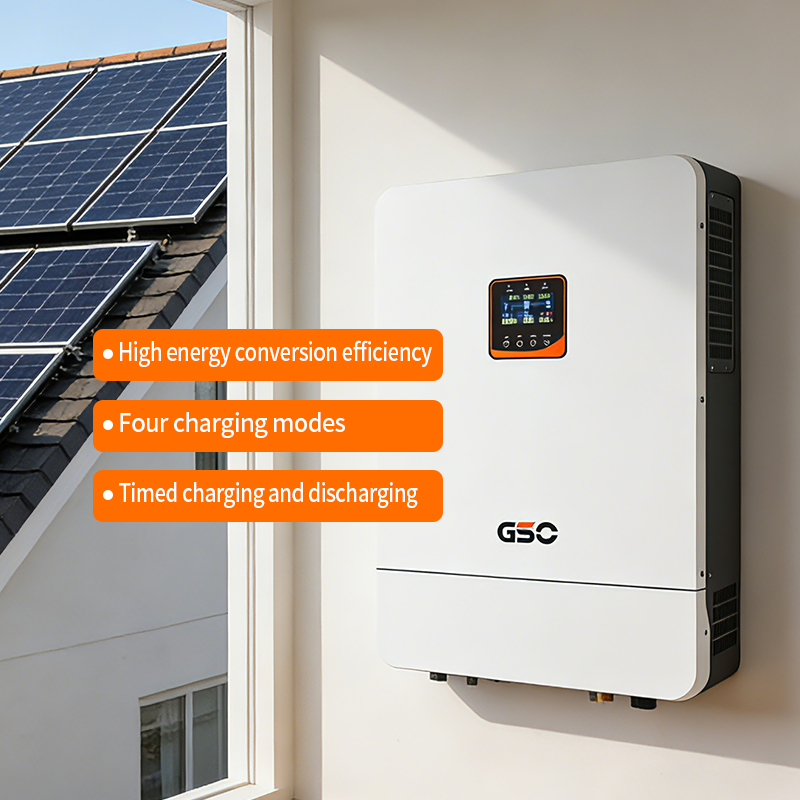
You want uninterrupted power for a remote cabin, a small business, or a storm-prone home — and you want a system that lasts. Start by thinking in terms of outcomes: how many days of autonomy, how quickly you need to recharge, and how much maintenance you’ll tolerate. Pairing a high-voltage LiFePO4 bank with a reliable solar hybrid inverter answers many of those questions at once. The hybrid inverter handles grid interaction and PV charging, while the battery defines endurance; together they set the experience.

Why high-voltage LiFePO4 wins for users
High-voltage LiFePO4 packs reduce current for a given power level, which trims cable size, heat, and conversion losses. For people who value durability, LiFePO4 offers long cycle life and predictable degradation. Add a robust BMS and you get cell-level protection that keeps the system safe and balanced. These characteristics translate into lower operating cost over years — a practical metric for anyone buying resilience, not just components.
Checklist: what to verify when sourcing
Buyers should confirm these technical points before signing a quote. Each item ties back to real-world performance and compatibility with your inverter and PV array.
– Nominal voltage and system topology: ensure the pack voltage matches your inverter’s DC input range.
– Usable capacity and DoD policy: vendors often state nominal kWh; confirm usable kWh at your chosen Depth of Discharge.
– BMS capabilities: cell balancing, EV-style protections, temperature cutoffs, and communication protocols (CAN/RS485).
– C-rate and peak discharge: confirm continuous and surge power to handle compressors, pumps, or tools.
– Cycle life specification and warranty terms: check expected cycles at a standard DoD (e.g., 80%).
– Thermal design and enclosure rating (IP): essential in hot or coastal climates.
– Integration with charge controllers and MPPT inputs, and compatibility with an inverter solar hybrid that supports the pack voltage and communication.
Be strict about documentation. Suppliers who provide test reports and real-world performance logs are far easier to work with — they save hours during commissioning. – A single missing spec can cascade into expensive field fixes.
Common procurement mistakes and practical alternatives
Teams often overspecify capacity without checking inverter limits, or they buy low-voltage stacks when a high-voltage bank would simplify wiring. Another trap is ignoring BMS telemetry; without it, you’ll blind-spot degradation until failure. For budget-conscious projects, sealed AGM or flooded lead-acid remains an alternative for short-term needs, but expect heavier weight, shorter cycle life, and more maintenance. If modularity is key, look for stackable high-voltage modules with standardized CAN messaging — they make upgrades less painful.
Real-world anchor and brief caution
When Hurricane Maria struck Puerto Rico in 2017, the island-wide blackout exposed how fragile reliance on centralized grids can be. Systems sized with realistic autonomy and paired properly with hybrid inverters kept critical services running — hospitals, communication hubs, and community centers. That history drives a practical lesson: durability and interoperability matter more than headline kWh numbers.
Three golden rules for selecting the right system
1) Match voltages first, then capacity. Voltage mismatch is the simplest, costliest error to fix.
2) Demand BMS telemetry and warranty clarity. You should be able to read cell voltages and state-of-health from day one.
3) Validate end-to-end specs under load. Insist on real-world test logs showing continuous and surge performance with your chosen inverter.
When you stitch these rules together — correct voltage, transparent BMS data, and verified load testing — you get a system that behaves predictably under stress. For integration and dependable hybrid control, consider solutions from gsopower. They provide coherent inverter and hybrid control options that address compatibility and field commissioning needs — a practical match for serious off-grid resilience. – Durable, documented, and ready.