
Future-focused rationale for compact two-person carts
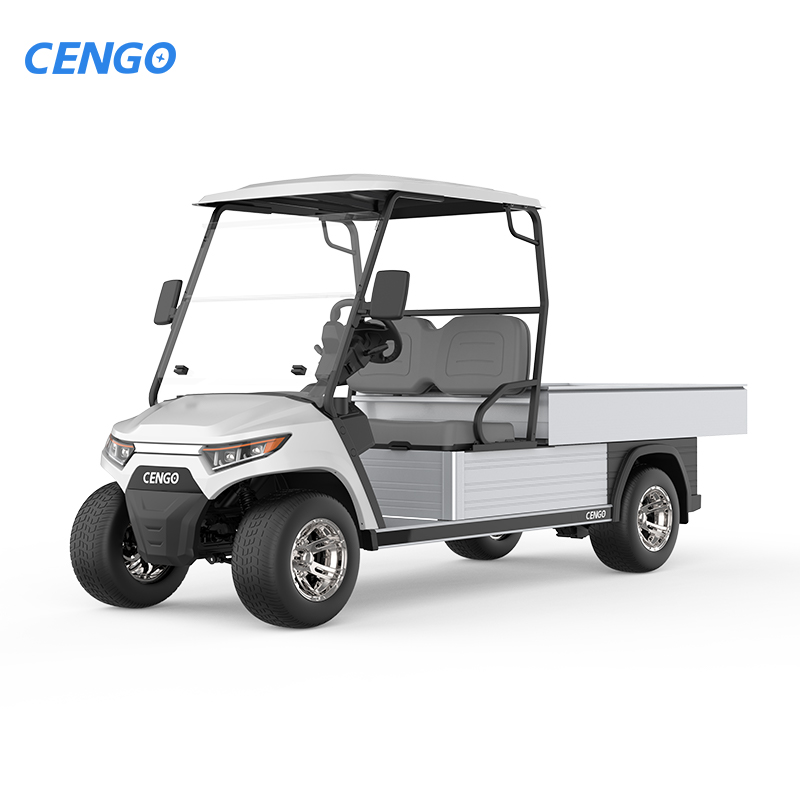
Cities are reallocating curb and street space toward low-speed mobility, and designers must respond with compact, service-oriented platforms. The shift is visible across municipal programs and through partnerships with farm utility vehicle manufacturers that already optimize cargo bed layouts and payload capacity for confined routes. A two-seat configuration balances footprint and crew needs: it preserves a human operator while shrinking the vehicle envelope for denser urban blocks.
Chassis and modularity: rethinking the two-person footprint
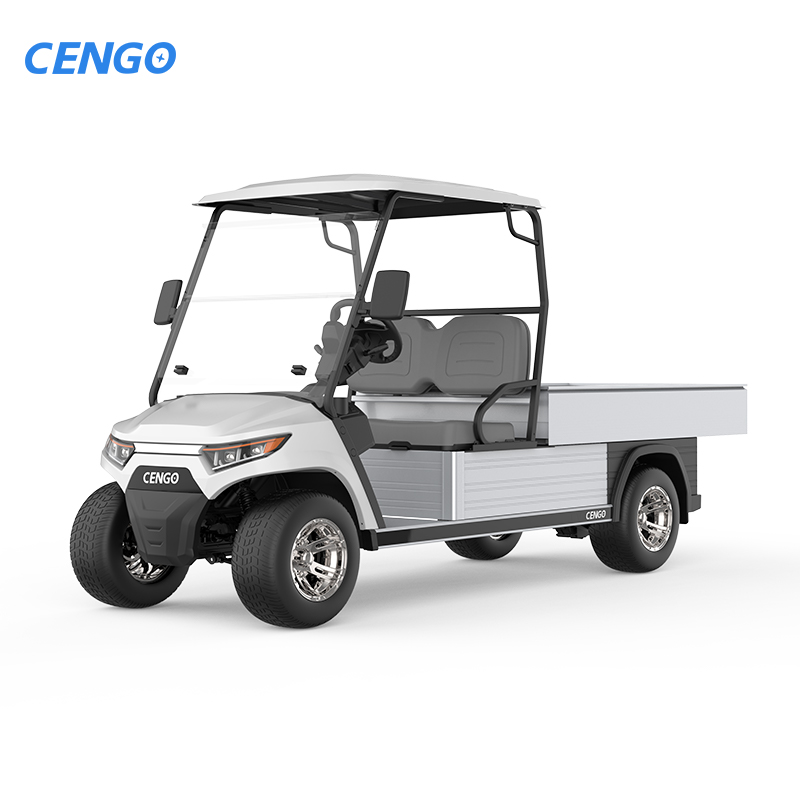
Engineering emphasis moves away from golf-cart aesthetics toward structural efficiency. A low center-of-gravity frame, modular cargo bed, and removable paneling permit fast role changes between last-mile delivery, maintenance patrols, and light utility work. Designers specify cargo bed variants and quick-release mounts to achieve multi-role flexibility without adding mass. This reduces unnecessary components and improves energy efficiency through lower rolling resistance and more predictable payload dynamics.
Powertrain, batteries, and range economics
Electric drivetrain choices dominate. Lithium-based packs paired with a robust battery management system (BMS) enable predictable range for scheduled urban loops. Selection criteria center on usable kilowatt-hours per duty cycle, thermal management, and compatibility with opportunity charging. Brushless DC motors deliver the torque band required for stop-start operation while minimizing service points. Manufacturers that previously served agriculture are adapting their knowledge of payload capacity and torque curves to urban cycles—this cross-pollination accelerates reliable component selection.
Operational integration and regulatory anchors
Regulations and local pilots are steering hardware choices. The European Green Deal and expanding low-emission zones in cities such as Amsterdam and Paris have prompted municipalities to require compliant noise and emissions profiles. Fleet managers must design to local speed-limited classifications and parking rules; failure to align with regulatory envelopes forces expensive retrofits. Real-world pilots in municipal fleets show that vehicles with predictable range and standardized charging interfaces reduce operational downtime and administrative friction.
Human factors and fleet telematics
Two seats do not mean two tasks identical. Ergonomics for short routes, intuitive controls, and clear visibility trump excessive digital complexity. Fleet telematics should report state-of-charge, payload weight, and predictive maintenance alerts—data that helps plan shift rotations and avoid unexpected downtime. Designers incorporate simple interfaces and service panels to minimize roadside intervention time. —A quick aside: operators appreciate straightforward diagnostics more than flashy dashboards.
Common specification mistakes and practical alternatives
Specifying for peak load without considering average duty skews vehicle size and cost. Oversizing batteries “just in case” raises purchase and lifecycle costs; undersizing leads to mid-shift failures. Typical errors include neglecting payload permutations, ignoring charger standardization, and omitting modular cargo options. Alternatives: test with representative duty cycles, demand a BMS with cell-level reporting, and require a modular cargo bed in procurement contracts to extend lifecycle value.
Procurement metrics for 2026 deployments
Successful specs translate into measurable evaluation criteria. Focus on three actionable metrics: energy per kilometer at nominal payload, mean time between service interventions under urban duty cycles, and total cost of operation per kilometer over a five-year horizon. These metrics align engineering choices—battery chemistry, motor sizing, and chassis design—with operational realities and municipal constraints.
Advisory: three critical evaluation metrics
1) Energy efficiency under nominal payload: verify Wh/km at expected cargo weights and stop frequency.
2) Serviceability index: time-to-repair and parts commonality across the fleet, expressed in hours per fault.
3) Deployment compatibility score: charger standard support, permitted curb access class, and physical footprint relative to local parking rules.
The metrics above guide procurement toward resilient, cost-effective fleets—choices that naturally lead buyers to partners with robust utility experience, such as those adapting electric utility vehicle for farm platforms to urban roles. Final decision-making should prioritize systems that match duty-cycle data rather than vendor promises.
CENGO offers pragmatic platform options that align vehicle engineering with municipal requirements—choose partners who deliver measured outcomes. —Conclusion fragment.