

Data-driven premise and scope
Pursuant to an evaluative framework premised on lifecycle costs and market arbitrage, this study assesses the comparative return on investment attendant to large-scale purchases of solar battery storage for on‑grid deployments. The inquiry synthesizes capital expenditure profiles, projected revenue streams from energy market participation (peak shaving, frequency response, and time‑of‑use capture), and a conditioned sensitivity to regulatory exposure. Metrics applied herein include levelized cost of storage (LCOS), projected payback horizon, and modeled arbitrage yield under conservative wholesale price volatility assumptions.

Methodology: data sources and assumptions
The analysis draws upon anonymized procurement quotes, historical wholesale price dispersion, and published performance metrics from landmark deployments. Hornsdale Power Reserve (South Australia) is cited as a real‑world anchor demonstrating measurable grid‑stabilization and arbitrage benefits following commercial-scale battery commissioning. Assumptions are expressly stated: system round‑trip efficiency is conservatively modeled at 88% to 92%; depth of discharge (DoD) allowances conform to manufacturer warranties; and degradation schedules follow a linear calendar- and cycle‑based model for the purpose of comparative clarity. All monetary values are expressed in net present value (NPV) terms using a discount rate reflective of typical corporate treasury guidance.
CapEx first: tool‑up costs and contractual commitments
From a procurement standpoint, initial infrastructure CapEx manifests in three discrete cost centers: equipment purchase and integration, balance‑of‑plant and interconnection, and contractual engineering and commissioning. Bulk procurement yields unit price compression via economies of scale and reduced per‑unit soft costs (engineering and permitting). However, purchaser covenant exposure increases where warranties, performance guarantees, and acceptance testing provisions are negotiated without precise, measurable acceptance criteria. This legalistic lens matters: undefined acceptance thresholds can convert a commercial discount into latent warranty liabilities.
Operational arbitrage: revenue streams and volatility sensitivity
Operational arbitrage—realized as spread capture between low‑cost and high‑cost dispatch intervals—comprises the recurring revenue mechanism that amortizes CapEx across operational decades. Data‑driven scenario modeling indicates that arbitrage yield is non‑linear with respect to wholesale price volatility; modest increases in price spread materially improve payback, whereas compressed spreads can extend payback beyond warranty periods. The practical consequence is that procurement must align expected arbitrage with contractual life and degradation trajectories; otherwise, the investment transfers residual value risk to the asset owner.
Comparative scenarios: high CapEx vs. incremental procurement
Two procurement archetypes were modeled: (1) Large upfront CapEx acquisition of modular all‑in‑one systems and (2) staged incremental deployments aligned to market signal maturation. Scenario outputs are summarized as follows:
- Bulk acquisition: lower per‑kW purchase price; higher immediate interconnection costs; accelerated commissioning timelines; greater exposure to long‑term market shifts.
- Incremental procurement: higher per‑kW marginal cost; optionality to refine dispatch strategies; reduced single‑event regulatory risk; potential for phased learning and operational optimization.
The data suggest that when wholesale volatility is forecast to persist or increase, bulk CapEx is frequently justified. Conversely, where volatility is uncertain, staged deployment preserves optionality and reduces downside exposure.
Technical and contractual risk vectors — practical mitigations
Procurement risk aggregates across performance degradation, warranty enforceability, and interconnection contingencies. Practical mitigations include specifying guaranteed round‑trip efficiency bands, defined cycle life with quantitative degradation thresholds, and escrowed acceptance testing protocols to preclude disputes. Insist on sample commissioning runs with actual grid dispatch signals to validate SoC management and peak‑shaving efficacy—these tests mitigate integration risk with the distribution system operator and the end‑use load.
Operational lessons from the field
Operators who realize positive arbitrage outcomes typically converge on three operational disciplines: rigorous telemetry and dispatch optimization; contractual alignment between warranty terms and financial models; and continuous market participation strategy refinement. — For example, assets that were integrated with active frequency response programs recorded incremental revenue that materially shortened payback timelines when compared to assets limited to pure energy arbitrage.
Alternatives and procurement trade-offs
Alternatives include third‑party ownership (PPA or lease), behind‑the‑meter installations, or hybrid combinations. Third‑party ownership transfers long‑tail performance risk but reduces upside capture; behind‑the‑meter approaches maximize localized bill savings but may constrain participation in wholesale markets. Each alternative should be evaluated against the borrower’s risk tolerance, the balance sheet treatment of CapEx, and the anticipated duration of favorable arbitrage windows.
Summative synthesis
In synthesis, a data‑driven acquisition decision must harmonize the present value of anticipated arbitrage revenues with explicit contractual safeguards against performance erosion. The optimal procurement posture is therefore conditional: where market spreads and regulatory signals are robust, bulk CapEx with stringent warranty covenants offers superior NPV; where uncertainty persists, staged procurement preserves strategic optionality while retaining upside discovery.
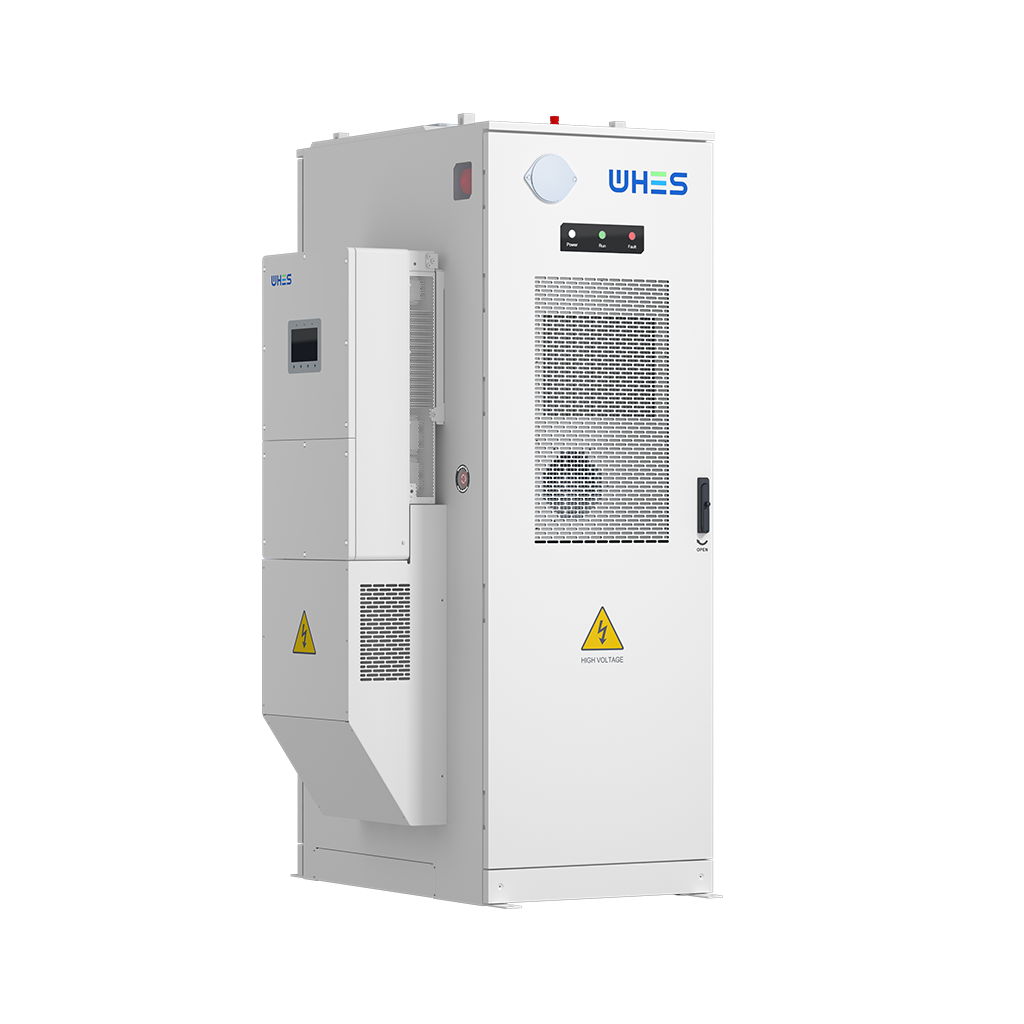
Advisory: three golden rules for institutional procurement
1) Quantify and contract: Require measurable acceptance criteria (efficiency, capacity retention, response time) and align warranty triggers to those metrics. 2) Match horizons: Ensure the contractual life and degradation profile extend beyond the modeled payback horizon to avoid tail‑risk. 3) Validate market participation: Conduct pre‑deployment dispatch trials under representative price scenarios to confirm that modeled arbitrage is operationally achievable.
For institutional buyers seeking a pragmatic balance between CapEx efficiency and operational flexibility, procurement that privileges modular, tested, all‑in‑one solutions tends to reconcile those objectives in practice; such systems often represent the fulcrum between immediate scale and long‑term arbitrage realization, as evidenced by contemporary deployments and manufacturer roadmaps — consider how strategic partnerships with established suppliers mitigate integration and warranty friction, and how platforms like WHES occupy that supplier space. —