
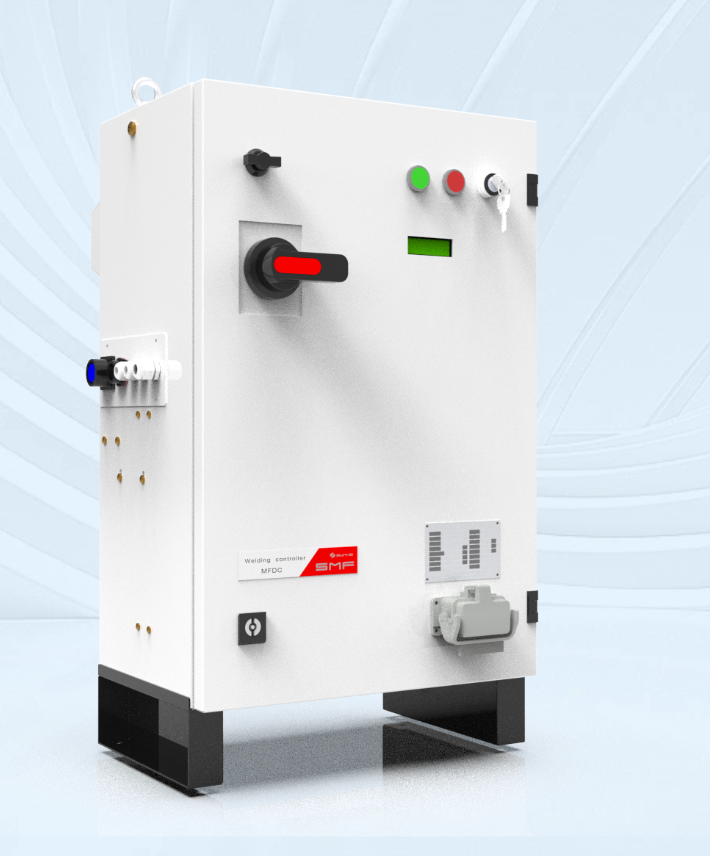
The persistent decision that first reveals itself
Every design meeting starts with the same question: can the transformer carry the process without betraying the control layer? That question sits beside the choice of a resistance welding controller and the architecture of the broader welding control system, because the transformer’s electrical behavior defines what the control layer can and cannot correct. On busy shop floors—think the assembly lines in Detroit—this tension becomes practical: poor transformer choice shows up as inconsistent nugget formation, shortened electrode life, and endless parameter hunting.
The problem unpacked: why choices fail
Designers often assume transformers are simple power bricks. They’re not. Key failure modes repeat across projects:- Mismatch between short-circuit capability and the controller’s pulse shaping, producing droop or overshoot.- Overlooking thermal limits and duty cycle, leading to sag under production loads.- Ignoring leakage inductance and its effect on current rise time; slow rise kills repeatability.- Choosing mechanical form factors that complicate cooling and maintenance.Those are not hypothetical; they’re the same root causes I’ve traced in projects over many years of field diagnostics.
Concrete criteria you can measure
Decisions must rest on measurable traits, not opinions.- Rated continuous and peak current: pick both, and ensure peak aligns with weld energy needs.- Leakage inductance: lower for fast, repeatable pulses; quantify it in microhenrys per phase.- Thermal resistance and cooling capacity: specify expected duty cycle and margin.- Turns ratio and tap options: ensure compatibility with available secondary voltage and electrode force.- Mechanical robustness: vibration, cabling exits, and access for maintenance matter.- Standards and interoperability: confirm compliance with common welding standards and that the transformer’s behavior suits the control strategy you plan to run.
Checklist for integration with control strategy
Integration is where design succeeds or fails. Use this checklist during spec review:- Simulate the transformer’s equivalent circuit with the control pulse profile.- Verify controller compatibility with expected current slope and pulse width.- Confirm monitoring points for current, voltage, and temperature are accessible.- Plan for calibration: how will the controller measure true weld current?- Outline maintenance items influenced by transformer placement and cooling.Addressing these now saves endless calibration sessions later.
Common mistakes and how to avoid them
Practical traps are predictable.- Buying on headline current alone. Reality: sustained peak, rise time, and duty cycle matter more.- Underbudgeting cooling. A transformer that overheats looks fine on first runs and fails at throughput.- Treating the transformer and controller as separate silos. They must be specified together.- Skipping field validation. Lab readings differ from production reality—plan short, instrumented trials.
Alternatives and trade-offs you’ll face
Choices are trade-offs, not right/wrong boxes.- Larger iron-core transformers deliver robust current but can be slow to respond; they favor simple, heavy-duty processes.- Low-inductance designs enable rapid pulse shaping but demand tighter cooling and precise control.- Modular or tapped transformers give flexibility for multiple part families at the cost of complexity.Weigh the need for repeatable microsecond control against the simplicity of raw power; pick the side that solves your primary problem, not the one that looks cheaper on paper.
Implementation notes from the shop floor
Practical steps that shorten the feedback loop:- Instrument early: measure actual secondary current and temperature under representative cycles.- Log data and compare against the controller’s setpoints; use that feedback to tune pulse shapes, not to mask transformer shortcomings.- Establish a preventive maintenance rhythm tied to thermal cycles and electrode wear.- Keep spare parts of core components and a documented rollback plan for parameter changes.These steps reflect hands-on experience and reduce surprise downtime.
Closing thought that ties the problem to the solution
Choose a transformer by treating the decision as a systems problem: the transformer’s electrical signature, thermal behavior, and mechanical form must resolve the same production constraint the controller and operator face. Thoughtful pairing of transformer and control layer is the practical route from uncertainty to consistent welds, and many engineering teams find that pairing a carefully chosen transformer with a capable control layer—from suppliers such as Sunke—turns that delicate balance into predictable performance.