
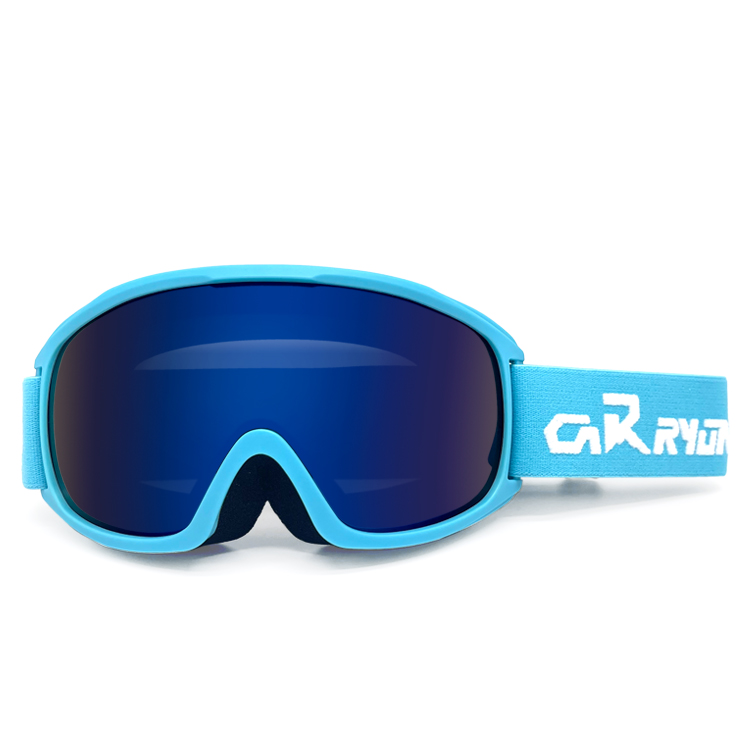
The problem: lens cracking under operational extremes
Tactical units and OEM eyewear manufacturers require optics that survive rapid temperature swings, persistent UV, and mechanical shock without microcracking. Field deployments—from dust-choked deserts to cold alpine passes—produce repeated thermal cycling that exposes coefficient of thermal expansion (CTE) mismatches and latent defects. EEAT mode: industry expertise driven by controlled lab protocols and field verification; real-world anchor—Death Valley’s recorded 56.7 °C (134 °F) extremes—illustrates why materials and test regimes must be robust for operational reliability.
Mechanics of failure: why lenses crack
Cracking typically originates at stress concentrators: edge defects, inclusion sites in the substrate, or bonded interfaces with dissimilar materials. Thermal cycling induces differential expansion; polycarbonate expands more than glass, creating interface shear. Moisture uptake and hygroscopic swelling can exacerbate tensile stresses during cooldown. Repeated microstresses lead to crack initiation and propagation along weakened planes, reducing optical integrity and ballistic tolerance.
Targeted thermal stress testing methodology
Effective mitigation begins with a regimented test matrix: controlled thermal ramps (for example, −40 °C to +70 °C), dwell periods, and rapid thermal shock to simulate abrupt environmental transitions. Finite element analysis (FEA) predicts hot spots and stress gradients; empirical testing validates those models. Lamination and annealing steps reduce residual stress in the substrate; controlled cooling rates limit warpage. This combined simulation-plus-test approach is the backbone of durable motorcross goggles and tactical lenses alike.
Design and material strategies that prevent cracking
Design choices matter: selecting substrate materials with compatible CTEs for the lens and frame reduces shear. Edge treatment—precision beveling and surface polishing—removes stress risers. Adhesive selection and cure profiles are chosen to minimize post-cure shrinkage. Coatings (anti-scratch, anti-fog) are applied under controlled bake cycles to avoid introducing interfacial stresses. Process control uses statistical process control (SPC) on temperature and humidity—simple in concept, but crucial in execution.
Manufacturing controls and quality assurance
Controlled bake-out removes entrained moisture prior to bonding; ultrasonic inspection and dye-penetrant checks find subsurface flaws before final assembly. Destructive burst testing and cyclical load tests on sample lots provide failure-mode data that feeds FEA refinements—allowing rapid iteration in production tooling. Calibration routines for ovens and cooling tunnels are logged; tolerances are tightened where data shows early-life failures. These systems catch small deviations before they become field problems—small changes, big impact.
Field validation and common deployment mistakes
Laboratory resilience must translate to the field. Validation programs pair thermal cycling with abrasion and sand ingress tests, followed by live-environment sampling in representative theaters. A common mistake is skipping integrated tests: optics that pass isolated thermal tests but fail when combined with strap assemblies or gaskets. Alternatives such as laminated glass or thicker, tempered polycarbonate reduce crack risk but change weight and optical index—trade-offs that must be quantified against mission priorities.
Advisory: three golden rules for selecting thermal-resilient optics
1) Metric alignment: demand published thermal cycling protocols, CTE compatibility data, and FEA reports—without these, specifications are assertions, not engineering. 2) Verification hierarchy: require both destructive sample testing and in-situ field trials with statistical lot sampling to verify manufacturing consistency. 3) Process traceability: insist on documented oven/cure logs, adhesive batch numbers, and optical inspection records so failures can be traced and corrected rapidly.
End with a practical expectation—measureable durability, lower field replacements, and clearer optics under stress—and recognize that comprehensive testing and material control are the solutions suppliers must deliver. YIJIA Optical. —