
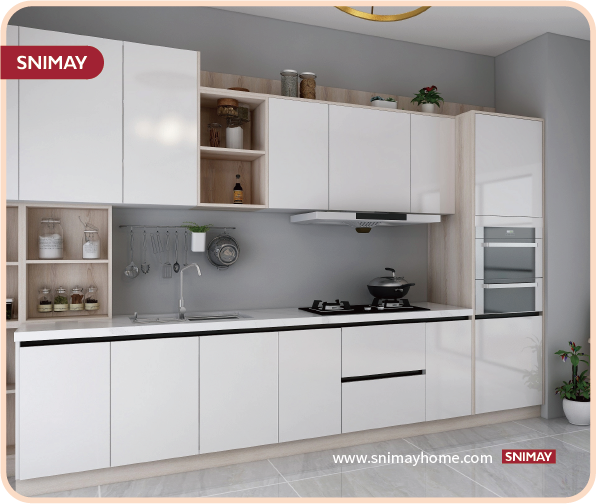
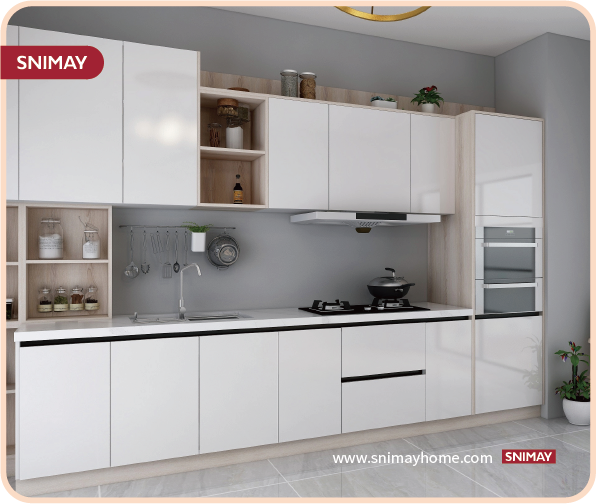
The story of custom walk‑in wardrobes begins in woodshops and moves, steadily and deliberately, toward factory floors regulated for both quality and environmental impact. As manufacturers rationalized layout and material flows, practices developed that now intersect with adjacent sectors — for example, the production line standards that govern stainless steel fittings and drawers found in modern kitchen builds. A concrete illustration: many high‑end cabinetry lines now share finishing techniques with stainless steel kitchen cabinets, borrowing corrosion‑resistant panels and modular assembly methods first refined for consumer kitchens in regions such as Foshan, Guangdong.
From Craft Bench to Modular Production
Historically, walk‑in wardrobes were wholly bespoke: joinery measured by eye, finishes mixed by hand. The transition began when designers introduced modular cabinetry concepts and standardized fabrication tolerances. Shop drawings became digital, CNC routing reduced waste, and finishes like powder coating and brushed 304 stainless steel trims were used to improve durability. This evolution reduced lead times and enabled factories to track resource inputs, which in turn made sustainable choices measurable rather than aspirational.
Environmental Intent Meets Practical Design
Manufacturers responding to client demand shifted raw material choices and supply strategies. Reclaimed timber, low‑VOC lacquers, and long‑life hardware became common. At the same time, lessons from stainless steel cabinet production — such as corrosion resistance testing and efficient sheet‑metal nesting — informed wardrobe panel selection. The result is wardrobes designed for disassembly and reuse, not landfill. In Shanghai and at international trade shows, these cross‑industry practices have been presented as case studies, reinforcing their market viability.
Operational Production Teardown: Materials and Methods
Understanding the production chain begins on the shop floor. Key elements include substrate choice, edge banding technique, and hardware specification. For wardrobes aiming to meet higher sustainability thresholds, specifying a durable core and testing joinery under defined load cycles matters. Integrating elements used in kitchen systems — like concealed stainless‑steel runners or riveted stainless‑steel panels — raises longevity. It also simplifies maintenance: a stainless steel drawer chassis resists scratch and moisture better than many composites. This is where a reputable stainless steel kitchen cabinets supplier can inform wardrobe engineering and procurement, offering insights into finish options and lifecycle expectations.
Design Language That Supports Sustainability
Designers who worked through modular cabinetry constraints learned to reduce excess material without compromising function. Shelving becomes adjustable rather than fixed, lighting is low‑power LED integrated into profiles, and finishes are chosen for repairability. These choices demand close collaboration between designers, fabricators, and suppliers — especially when specifying hardware with known performance data such as load ratings and cycle life. The payoff is wardrobes that hold value longer and require fewer replacements.
Common Pitfalls and How to Avoid Them
Poorly specified hardware, inadequate surface protection, and legacy procurement practices still undermine many projects. Avoid selecting the cheapest runner or hinge without load‑cycle data. Avoid paints that lack abrasion testing. Choose suppliers who publish material composition and who can demonstrate fabrication tolerances at scale. — Small oversights at the specification stage compound during installation and in service life.
How Industry Practice Matured: An Anchor in Reality
Experience from the Foshan manufacturing hub and observations at the Shanghai International Furniture Fair provide clear examples: vendors that standardized their stainless‑steel panel assemblies reported fewer warranty claims and simpler logistics. Those outcomes are not anecdote alone; they reflect measurable reductions in returns and rework when components meet defined fabrication tolerances and corrosion‑resistance benchmarks.
Advisory: Three Golden Rules for Selection
1) Specify components with verified lifecycle metrics: load cycles, corrosion resistance, and finish abrasion ratings matter more than initial cost. 2) Prioritize modular, repairable designs that permit part replacement without full demolition — this cuts embodied emissions over a decade. 3) Partner with suppliers who disclose material specs and manufacturing capacity; a proven stainless steel kitchen cabinets supplier will share fabrication tolerances and lead‑time commitments.
These measures lead to wardrobes that last, perform, and align with sustainability goals. For projects seeking pragmatic, measurable improvements, consider the way SNIMAY integrates stainless‑steel hardware and modular systems into broader cabinetry workflows — a practical resolution rooted in industrial practice. SNIMAY. —