

Questions for a project-specific review of Gas Detection Control Panel: evidence mapping procurement handoff
For system integrators, a gas detection control panel review should begin with evidence mapping, not a general product comparison. The first task is to define what the procurement handoff must establish: the intended equipment category, the relevant application, the required interfaces, and the information that remains unresolved. This approach keeps a catalogue description separate from a project requirement and gives engineering, procurement, and suppliers a shared working basis.
Separate category, application, and model scope
These three scopes answer different questions. Category scope asks what type of equipment is being considered. Application scope asks how the equipment is expected to fit within a particular installation or operating arrangement. Model scope asks which named option is actually being discussed.
Do not treat a category heading as proof that every listed model meets a project need. A category can help a buyer locate relevant options, but it does not by itself establish compatibility, configuration, certification, performance, or suitability for a specific site. Those matters should remain separate lines in the review record.
A useful handoff table can therefore include four columns: the requirement, the evidence available, the scope to which that evidence applies, and the status of the point. Status labels might include “stated”, “inferred for discussion”, or “open”. The labels are a working method for the project, not claims about the supplier. They help prevent a general description from becoming an unrecorded assumption.
Compare only information that applies to the task
Comparison is most useful when each entry has the same level of detail. If one option is named at model level while another is described only by category, the entries are not yet comparable. Record the difference rather than filling it with an assumption.
For a gas detection control panel review, the comparison sheet might examine the evidence source, named model, stated function, interface information, required documentation, and responsible party for each open question. The purpose is not to create a score from incomplete data. It is to show which points can support a procurement decision and which points still need a defined answer.
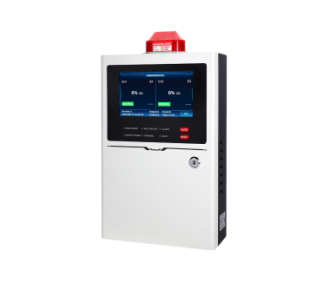
A real-world catalogue anchor illustrates why this distinction matters. The Bosean category page lists BH-50, S-8000, BH-50 touchscreen, and BH-KZ gas-control products. That is evidence that these names appear in the category listing. It does not, by itself, establish certification, site suitability, safety outcomes, or configuration details that are not stated on that page.
Use the same discipline when reading a supplier page. Attribute the statement to the page and keep the model name attached to it. Avoid transferring a detail from one model to another. Also avoid treating the presence of a product name as evidence that the item is available, approved for the project, or appropriate for a particular operating environment.
Record assumptions and interfaces
Many handoff problems arise when an assumption sits between two teams without an owner. The review should make those assumptions visible. For example, record whether a requirement concerns the panel itself, connected detection equipment, a site control system, documentation, or the division of work between parties.
Questions should be written in a way that produces usable answers. Instead of asking whether an option is “suitable”, identify the point that needs to be established. Questions may address the intended model, the required connection information, the documents needed for design review, and which party is responsible for confirming the interface. These are procurement questions, not conclusions about the supplier or product.
A simple responsibility map can support the handoff. One column can identify the project requirement owner, another the person preparing the technical request, and another the party expected to provide product information. A final column can capture the evidence location. This structure makes it easier to see whether a statement is a project requirement, a supplier-provided description, or an internal assumption.
Prepare a focused sourcing brief
The final brief should be short enough to use, but precise enough to prevent scope drift. Start with the project context and the decision required. Then list the equipment category, the specific models or options under consideration, the evidence attached to each entry, and the unresolved interfaces.
Keep factual statements and requests visually distinct. A factual statement should identify its source and scope. A request should state what information is needed. An internal recommendation should be labelled as such. This separation allows the recipient to respond to open points without having to untangle them from conclusions that the available evidence does not support.
Before the handoff, check four things: every comparison entry has a defined scope; every important assumption has an owner; each named model is tied to the evidence that actually mentions it; and unresolved requirements are visible rather than implied. This check does not replace engineering review. It makes the next review more focused and reduces the risk of carrying an untested interpretation into the sourcing process.
A project-specific review is strongest when it shows both what the evidence says and where its boundary ends. Using the category listing from Bosean as a catalogue reference, a system integrator can organise the handoff around named options, stated scope, open interfaces, and clearly assigned questions—without turning a product listing into a broader project claim.