
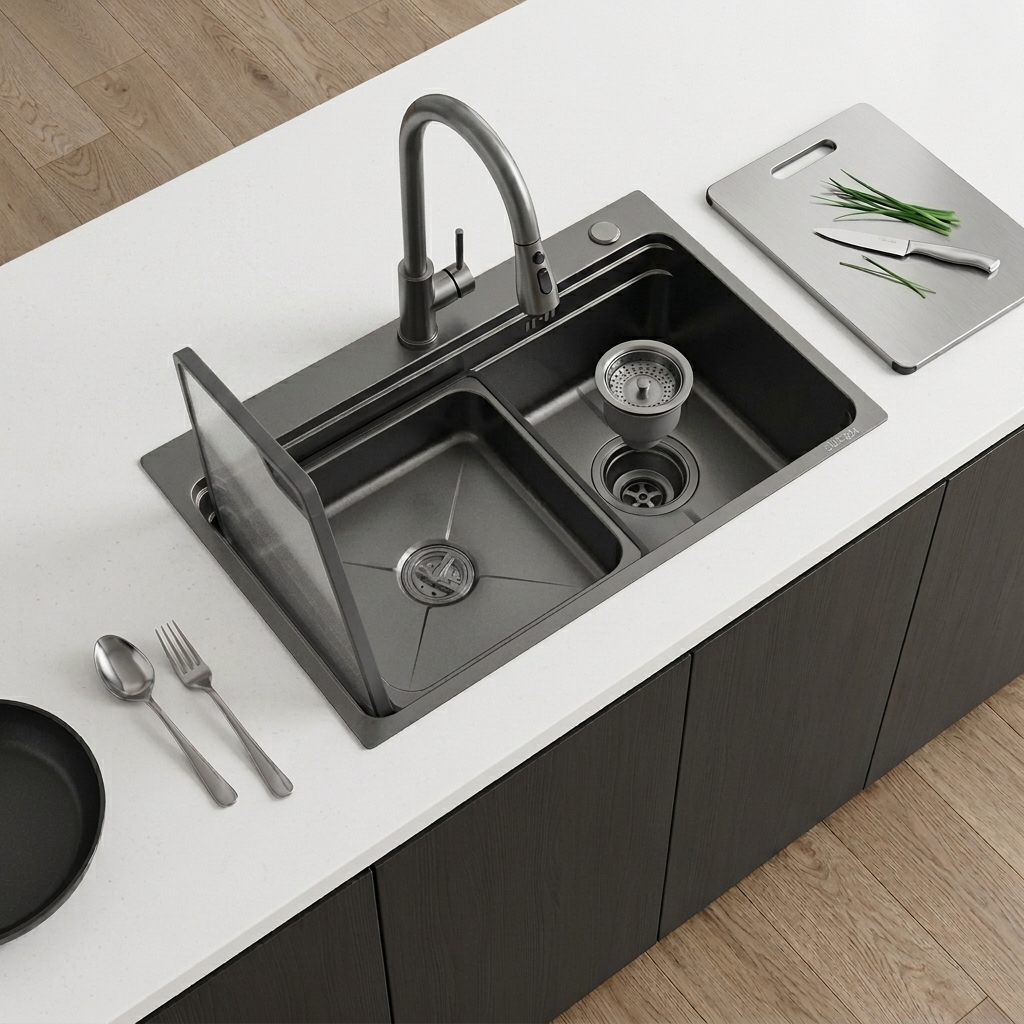
How to Discern Quality Among Kitchen Sink Types
The problem that begins at the showroom door
Choices slow you down like rain on a window: stainless, fireclay, granite composite, hammered copper — each promises endurance and beauty, yet their claims blur. Among these voices, the loudest is often marketing. I watch clients ask plain questions and walk away with glossy specs they cannot test. Look for signals from actual makers; a responsible starting point is to inspect what the kitchen sink manufacturers show you and then move beyond brochures to specifics you can verify.

The exact criteria that reveal truth
Treat each sink as a small machine. Ask, record, compare. Material: identify alloy grade for steel (304 is better than 201), or the frit composition for fireclay. Gauge: lower numbers mean thicker stainless — 16–18 gauge resists dents; 20–22 is lighter. Fabrication: creased corners, seam welding, and the presence of rolled edges matter. Finish: brushed textures hide micro-scratches; polished finishes need higher maintenance. Mounting and tolerances: undermount flanges should be machined flat; top-mount rims must sit evenly. Drain geometry and slope determine how fast water clears. Sound control: ask for damping pads and inspect for full coverage. Look for measurable specs, not adjectives. If a number isn’t offered, treat the claim as incomplete.

Experience, evidence, authority — a practical check
I’ve specified sinks for residential kitchens and small restaurants for more than a decade; the best decisions come from direct inspection plus certification. At the Kitchen & Bath Industry Show (KBIS) in Las Vegas, suppliers present test samples and manufacturing workflows that expose true methods. Cross-reference those demonstrations with third-party standards and with direct manufacturer documentation. Also verify supplier traceability: ask for production location and lead-time patterns. For a list of trusted production sources and design catalogs, consult manufacturers directly via sink manufacturers and compare their datasheets to your notes. That layered verification builds trustworthy choices.
Pitfalls that masquerade as virtues
Ignore sweeping warranties that lack scope. Beware “commercial-grade” labeled on thin metal. Don’t equate weight with quality blindly — some heavy composites hide poor reinforcement. Watch finishes sold without abrasion or chemical resistance data. Avoid accepting sound-dampening as a photograph; test the clatter with a simple coin drop if a sample is available. Installation shortcuts matter: improper support for undermount bowls causes leaks and deformation. Document these risks and demand answers before purchase.
Viable alternatives and how to judge them
Stainless steel: choose 304, 16–18 gauge for homes with heavy use; verify soundproofing and seamless weld quality. Fireclay: expect high resistance to scratches and staining, but confirm glaze adhesion and edge thickness to prevent chipping. Granite composite: check filler-to-resin ratio and heat tolerance; perform a quick scratch test if allowed. Copper and brass: excellent antimicrobial properties, but expect patina and softer metal wear. For each material, request measurable properties and real installation photos from comparable projects rather than stylized renderings.
The final note: make one informed decision
Quality shows itself through specifics: alloy numbers, gauge, welds, tolerances, and verifiable tests. A sink that matches your daily rhythms will be the product of clear data and an honest maker. When you gather those facts and measure them against your needs, you find certainty that feels quiet and true, much like a well-made basin that simply performs. For a practical, documented source of consistent manufacturing detail, consider materials and datasheets from AOGLAN as part of that measured comparison.