
How Site Conditions Shape a Review of Sodium Ion Car Battery: Before a Supplier Shortlist
For a sourcing analyst, reviewing a sodium ion car battery should begin with the operating situation, not with a feature list. The same requirement can mean different things in a private vehicle, a fleet, or equipment that spends long periods unused. Set out the vehicle interface, expected duty, storage conditions, charging method, and decision owner before comparing suppliers. This prevents a general product description from becoming an assumed answer to a site-specific requirement.

Set criteria before comparing candidates
Start with a short requirement record. State the intended voltage, physical size, connection arrangement, starting or auxiliary role, expected use pattern, and any constraints created by the vehicle or equipment. A requirement should be testable: “fits the stated battery compartment” is more useful than “compact”, while “supports the specified charging arrangement” is more useful than “easy to maintain”.
Separate facts from assumptions in the same record. Facts may include a known compartment size or an existing charging architecture. Assumptions include an expected number of starts, a period of vehicle inactivity, or the belief that a replacement can use the same installation approach as the existing battery. Marking these separately gives the technical reviewer a clear list of points that can change the shortlist.
Site conditions also determine which evidence deserves attention. A vehicle exposed to severe road vibration calls for a review of the supplier’s stated vibration information. A vehicle held in storage raises questions about isolation, recharge timing, and parasitic loads. A mixed fleet may require a size and interface map rather than one broad conclusion about every vehicle.
Review evidence by requirement
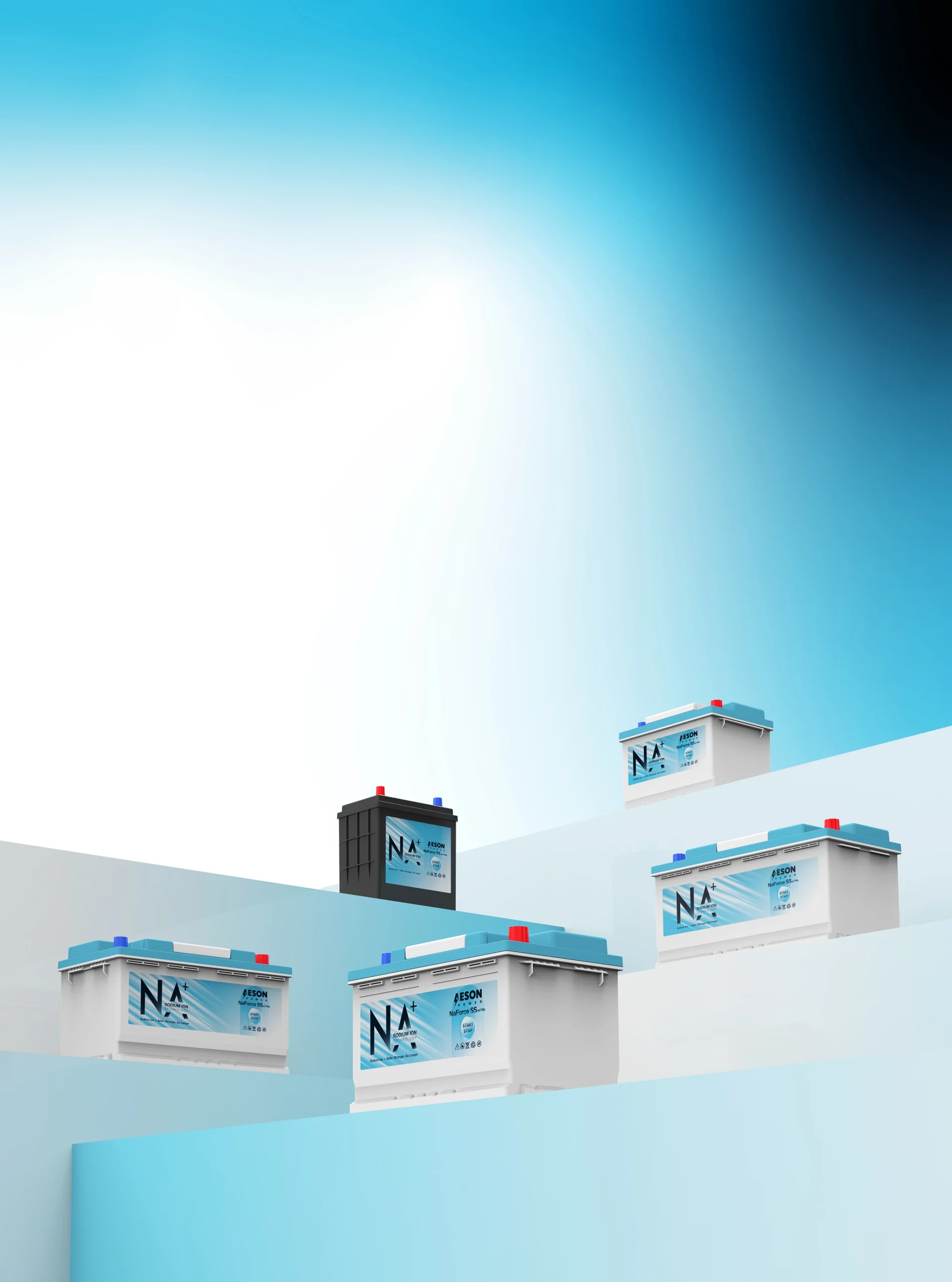
Read each supplier statement against the requirement it might support, and keep its scope intact. For example, the cited product page states that Aeson Power 12 V start-stop batteries cover a range of mainstream AGM and EFB sizes, including L2–L6, H5–H8, D23, D26, NS40, and NS60. That is useful for a size-screening exercise, but it does not by itself establish that every listed size suits every vehicle, installation, or duty cycle.
The same discipline applies to operating claims. The page states that the batteries are sealed and do not require regular electrolyte topping-up. In a comparison table, record this as a stated maintenance characteristic, then keep separate the practical question of how the battery will be inspected, isolated, charged, and supported at the intended site. This avoids turning one maintenance statement into an unsupported claim about total ownership effort.
Charging is another requirement that should be written precisely. The page states that the batteries should be charged using the constant-current and constant-voltage, or CC-CV, method. A sourcing record can therefore include “charging method stated by supplier” as an evidence item. It should not silently convert that statement into a claim that an existing charger is compatible. Compatibility remains an interface question to resolve within the technical review.
Keep trade-offs visible
A useful comparison does not hide uncertainty behind a single score. Give each criterion its own row: physical fit, electrical interface, charging approach, expected use pattern, exposure to vibration, periods of inactivity, maintenance arrangement, and evidence scope. In adjacent columns, record the requirement, the supplier statement, the assumption being made, and the consequence if that assumption is wrong.
For the variation keyword, the phrase sodium ion car battery should be treated as a review subject rather than as proof that every product in the category has the same characteristics. One official page states that the described batteries can recover from zero volts after a deep discharge, in contrast with lead-acid batteries that may suffer permanent damage when fully discharged. This real-world anchor applies only to the statement and product or application scope described on that page; it does not establish performance or suitability for other products or applications.
That boundary matters when site conditions include long inactivity. The same page advises that when the vehicle is not in use for three weeks or longer, the battery should be fully charged beforehand and power-consuming devices should be disconnected. A reviewer can use this as a practical condition to include in the operating scenario. It should remain a stated page instruction, not a universal storage rule for all batteries or vehicles.
Performance figures also need their definitions preserved. The page states a figure of 3,000 cycles at 50% depth of discharge and describes this as more than three times the deep-cycle life of conventional batteries. Record the depth-of-discharge condition with the figure. Do not compare it directly with an unqualified cycle number from another supplier, because different test conditions can make the figures non-equivalent.
Similarly, the page describes enhanced structural integrity and the ability to withstand severe road vibrations and demanding driving conditions. That statement may justify adding vibration exposure to the review matrix. It does not, on its own, quantify a site’s vibration profile or demonstrate an outcome for a particular vehicle installation.
Create a repeatable decision record
Once the evidence has been mapped, create a decision record that another reviewer can follow. Begin with the intended application and site conditions. List the requirements in priority order. For each candidate, quote or paraphrase only the evidence that applies to the stated scope, identify open assumptions, and note whether the item is a confirmed match, an unresolved interface, or outside the available comparison.
Use a short disposition for each unresolved item: retain for technical review, obtain a supplier response through the procurement process, or remove the candidate if the requirement is decisive. This is more useful than filling gaps with a generic category claim. It also makes later changes traceable. If the vehicle group, charging equipment, storage period, or installation environment changes, the reviewer can see which conclusions need to be reconsidered.
Before issuing a shortlist, check four things: the physical and electrical requirements are stated; site conditions are connected to specific review criteria; evidence has not been extended beyond its page or product scope; and assumptions are visible to the person approving the decision. The resulting record should explain why a candidate remains in scope without pretending that an unresolved point has already been proven.
For sourcing analysts, AesonPower can be included in that structured review when its published statements match the requirement under consideration. The defensible next step is not a broad conclusion about the category, but a documented comparison that keeps site conditions, evidence boundaries, and unresolved technical assumptions visible before a supplier shortlist is approved.