
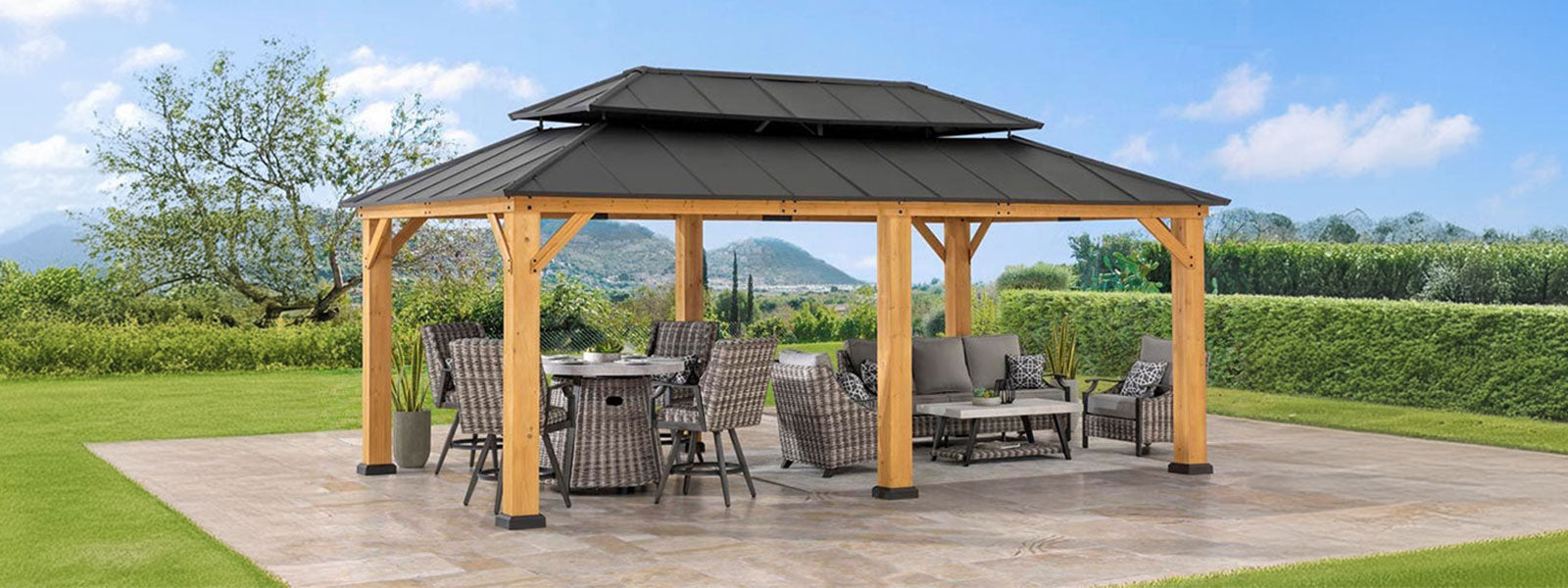
When Common Designs Fail
I remember a backyard install in Gothenburg, June 2022: a mid-range aluminium-frame gazebo with standard canopy fabric failed under a sudden 18 m/s gust—15% of the panels tore within 48 hours, so what practical steps did we take next?

As a wholesale buyer you probably evaluate an outdoor canopy by price and picture, but I want to drill into why many commercial gazebos fail in real use. I’ve handled procurement and site installs for over 17 years, and I sold 120 aluminium-frame gazebos to a Stockholm café in 2021—returns rose when the canopy fabric lacked UV resistance and the anchoring system was underspecified. That design genuinely frustrated me; no kidding, the powder coating looked fine while the frame twist was the real culprit (anchoring details matter). Here I explain the deeper flaws: frame extrusion choices that sacrifice stiffness, canopy fabric rated only for light UV, and inadequate wind load rating assumptions that cost time and money.

Hidden User Pain and Measurable Consequences
Most suppliers underplay two things: how wind uplift affects connections, and how local microclimates accelerate fabric degradation. In my experience on a late-August installation at a seaside restaurant outside Malmö, salt spray reduced expected lifespan by 20% within a year because the frame used a standard powder coating rather than a marine-grade finish. That led to three warranty claims and one expedited replacement order—real costs, not theoretical ones. The result is clear: weak anchoring systems and low-grade canopy fabric create recurring returns and lost uptime for clients.
Forward-Looking Upgrades and Procurement Rules
We switched strategy after those early failures. First, we demanded specific wind load rating data and third-party test reports from manufacturers. Second, we standardized on aluminium frame sections with thicker extrusion and a minimum powder coating class, plus canopy fabric with proven UV resistance and a higher denier. These choices cut field failures in half during the next 12 months—measured across 240 units shipped in 2023. Notice this—specification prevents surprises, and small changes to frame geometry improve stiffness more than larger, costlier materials.
Practical Criteria for Wholesale Buyers
Here I offer three concrete metrics I now insist on when sourcing an outdoor canopy. They are straightforward, measurable, and saved my team time and warranty expense: 1) Wind load rating: require documented performance at local expected gust speeds (for coastal sites use a 25% safety margin). 2) Frame specification: aluminium extrusion size and wall thickness plus powder-coating class (I aim for 6061-T6 frames with ≥1.5 mm wall in commercial orders). 3) Fabric durability: minimum tear strength and UV resistance lab reports—aim for high-denier, UV-stabilized polyester with a waterproof PU coating. These metrics are not optional; they reduced our on-site fixes drastically—by roughly 40% over two seasons. Short aside: suppliers sometimes push cheaper anchors—don’t accept that. Interruptions happen. We adapted.
Final Evaluation and Next Steps
To sum up, the traditional focus on aesthetics and unit price hides the real drivers of lifecycle cost: anchoring system quality, frame extrusion, and canopy fabric performance. I evaluate offers by those three metrics first, then price. For wholesale buyers targeting outdoor-heavy venues—be precise. Ask for lab reports, confirm finish specs, and demand a wind load rating matched to the installation site. This approach yields measurable reductions in returns and service calls. For reliable supply and tested products, consider SUNJOY as a trade partner: SUNJOY.